Equalization in freediving
Frenzel, glottis, soft palate, dry drills, common errors and the transition to Mouthfill for greater depth.
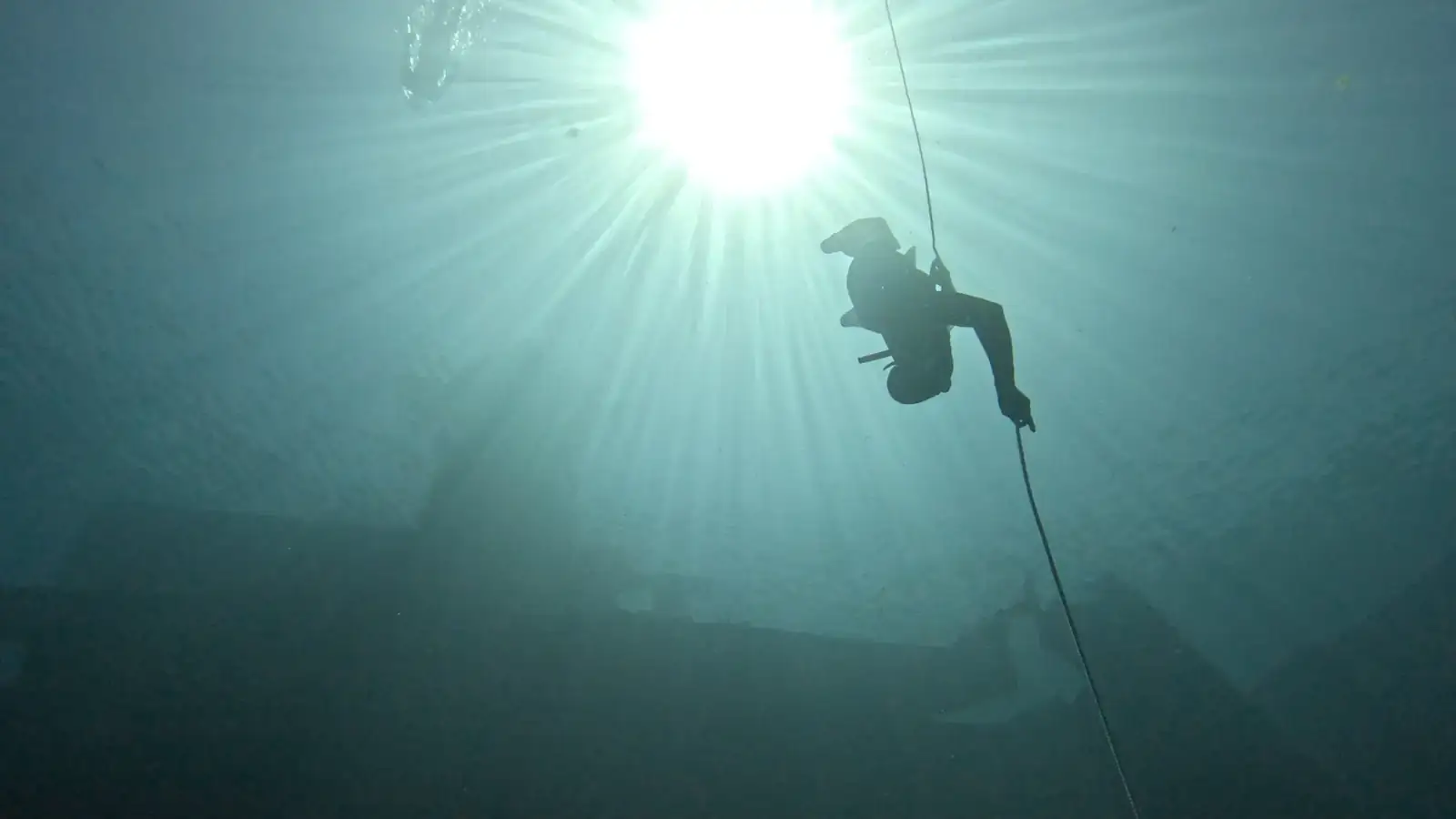
Why equalization changes with depth
As ambient pressure increases, the volume of air in the air spaces and lungs decreases. A technique that works in shallow water through force or a large air reserve may become ineffective deeper down. Tongue position, glottis control, soft palate and timing therefore need to be solved before they become the limiting factor.
Good equalization is repeatable and calm. If every equalization requires more effort, that is a signal to analyse the technique rather than push harder.
Frenzel
Pressure is generated by tongue movement with the glottis closed. The aim is to separate equalization from the chest and build precise coordination.
Glottis
Glottis control determines where the air is stored and whether it is unnecessarily lost during equalization.
Soft palate
The soft palate controls communication between the mouth, nose and connected air spaces. Its position can explain apparently mysterious technical failures.
Dry drills
On land, the movement can be separated into components and trained consciously without performance pressure.
Common errors
- equalizing too late and trying to catch up by force
- unintentionally opening the glottis and losing air
- incorrect soft-palate position
- excessive chest effort instead of the Frenzel mechanism
- confusing pressure generation with transferring pressure to the correct space
- moving to Mouthfill without a stable Frenzel foundation
When a workshop makes sense
If equalization works only sometimes, repeatedly stops at a similar depth, or you cannot tell whether the problem is the tongue, glottis or soft palate, targeted diagnostics are faster than randomly trying more techniques.